Your Healthy Diary — Memory & Brain Health
Your Healthy Diary Independent · Evidence-Informed · Reader-Supported
Updated: January 28, 2026 Health & Neuroscience 6 min read
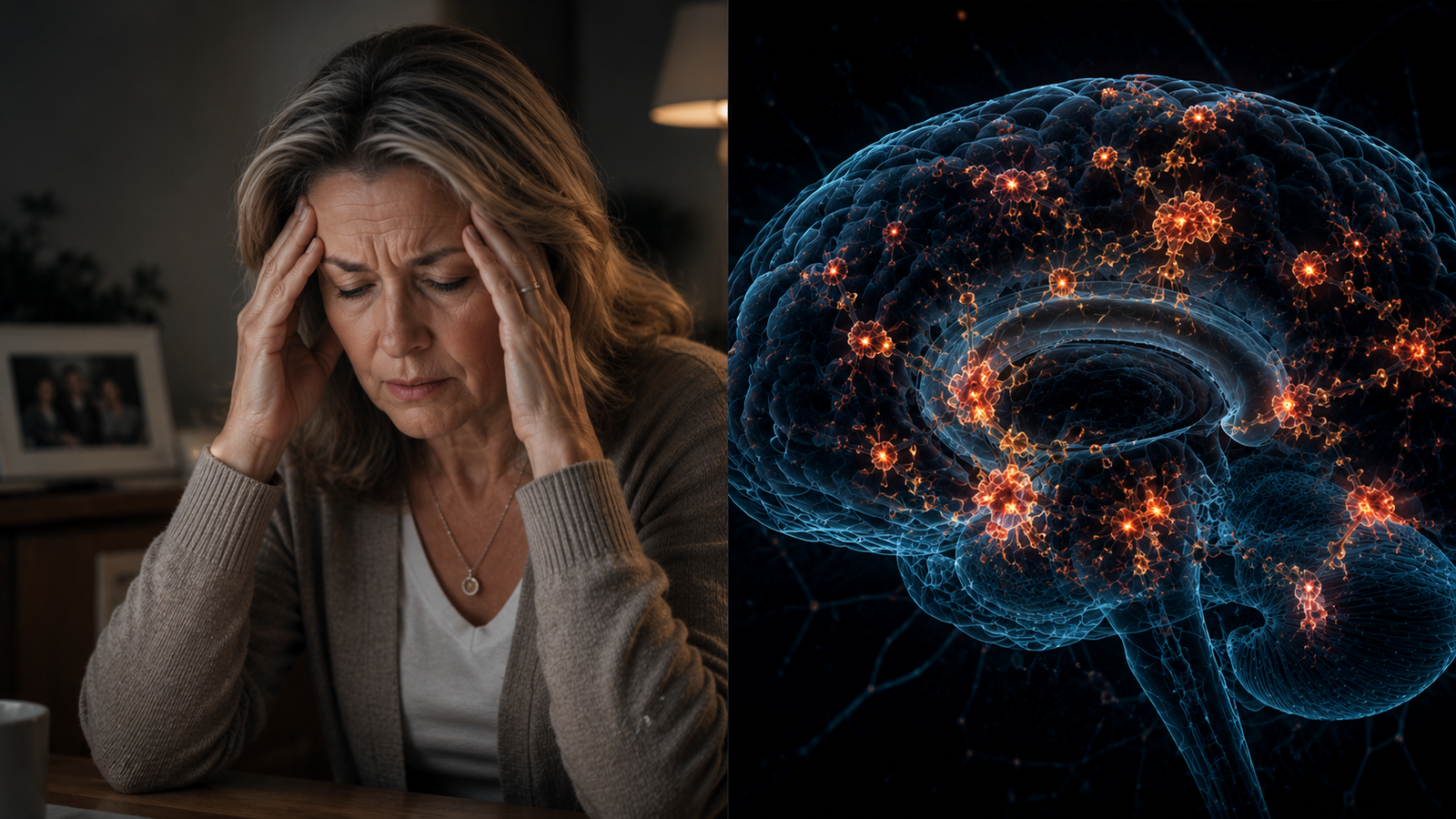
You've Been Told It's Just Aging — But New Research Suggests Memory Loss After 50 May Have a Very Different Cause Scientists are now identifying a hidden disruption in how the brain retrieves memories — something most doctors aren't testing for, and most treatments never reach.
Brain health research presentation Watch: The hidden reason memory loss keeps getting worse — explained in full detail in the presentation above.

It starts small.

A name you've known for years — suddenly gone. A conversation from that morning — completely blank by afternoon. You walk into a room and stop. Why did I come in here? You stand there waiting for it to come back. Sometimes it does. Sometimes it doesn't.

And if you've been searching "how to reverse memory loss" and everything you've found feels incomplete…
there's a good reason for that. Most of what's out there is targeting the wrong cause entirely.

You've probably noticed it getting harder to ignore.

The sharp, reliable mind you had at 40 — it feels different now. Not dramatically. Just… slower. Less crisp. Like trying to tune into a station that used to come in clear and now keeps cutting out.

If you're over 50 and you've recently caught yourself:

  • Forgetting names of people you've known for years
  • Losing the thread of a conversation mid-sentence
  • Struggling to recall what you did just a few hours ago
  • Feeling mentally foggy — especially by mid-afternoon
  • Searching for a word that you know you know — and drawing a blank
  • A quiet fear in the back of your mind that this might keep getting worse

Then this may be one of the most important things you read this year.

Especially because of what you're probably hearing from doctors:

  • Memory scan → "nothing abnormal"
  • Cognitive test → "within normal range for your age"
  • Blood work → "all looks fine"

And you walk out of that office with no real answers. Just "it's probably just stress" or "this is normal after 50."

But if it were normal — why does it keep getting worse?

"I've had three MRIs. Every test comes back normal. But I'm not normal. I can feel myself slipping and nobody can explain why. I'm terrified of what comes next."

— r/dementia community

If that sounds familiar — you're not imagining it. And you're not alone. But there's something critically important that almost nobody tells you after "all your tests are normal."

⚠ This Is Not Just Forgetfulness

Memory loss doesn't stay small. It starts with keys and names. Then it's missing appointments, losing conversations, struggling to follow stories. Then comes the moment your family starts finishing your sentences for you — or quietly having conversations about your future without you. The earlier you understand what's actually causing this, the more options you still have.

Here's what nobody explains after "all your tests are normal"

Most memory treatments work on one assumption: the brain is just aging.

So the advice stays the same. Do crossword puzzles. Exercise more. Eat better. Sleep earlier. Try this supplement. Try that one.

And for some people, it helps — for a while. Then the fog comes back. Sometimes thicker than before.

"I've done everything right. I exercise, I sleep well, I eat clean. And I'm still losing words. Still losing conversations. My doctor keeps saying it's stress. I know it isn't stress."

— YouTube comment, 800+ likes

Here's the question nobody asks: if the brain looks healthy on the scans… why does the memory keep failing?

That question has been sitting in research labs for years. And the answer that's starting to emerge is not what most people expect.

What researchers started finding when they looked deeper

Some neuroscientists stopped looking at the brain's structure — and started looking at something else entirely.

Specifically: the chemical environment inside the brain that determines whether memories can actually form and be retrieved.

What they found was a hidden disruption — a process that builds gradually, silently, for years. Not a tumor. Not a lesion. Nothing that shows up on a standard scan.

Something quieter. Something that works by interfering with the brain's own defense mechanisms. And something that most conventional approaches never even attempt to address.

Researchers began studying what separates people with sharp memory well into their 70s and 80s from those who start declining in their 50s. The difference wasn't structural. It wasn't genetic.

It came down to a specific brain-protective protein — one that most adults over 50 are quietly running low on — and the toxic compounds that appear to be suppressing it.

Which may explain why nothing you've tried actually fixes it — because it's not targeting the real source.

It may not be that there's no solution. It may be that the real cause has been missed entirely.
📌 The Question This Raises

If this hidden disruption is what's actually driving memory decline in adults over 50… then why do standard treatments keep falling short? And more importantly — what would actually reach it? That's exactly what the presentation below explains. In full detail. For the first time.

Why this explanation hasn't reached your doctor's office yet

One of America's leading brain specialists has spent 40 years studying cognitive decline. After analyzing over 225,000 brain scans from patients in 155 countries, he made a discovery that challenged everything conventional medicine had been saying about memory loss.

Adults with sharper memory well into their 70s, 80s, and beyond consistently showed one thing in common: significantly higher levels of a specific brain-protective protein — and dramatically lower levels of the toxic compounds that appear to suppress it.

His conclusion was direct:

"Cognitive decline is not inevitable. In the majority of cases, it has a specific, addressable cause — and a natural pathway to reversal that most patients are never told about."

— Leading neuropsychiatrist and brain imaging specialist

But here's the uncomfortable truth about why this hasn't changed what happens in most doctors' offices:

There is no financial incentive to point patients toward a solution that doesn't require ongoing prescriptions, repeat appointments, or expensive procedures. If the real answer is something you can address at home — the system doesn't profit from it.

🔴 What Keeps People Stuck in the Cycle

Standard medication → temporary relief, cognitive side effects, decline continues. Brain exercises → inconsistent results, no long-term reversal. Specialist visits → more tests, more "everything looks normal," no real answers. Expensive protocols → modest benefits, no root cause addressed. Each step manages the symptom. None of them reach what's actually driving it.

89%
of adults over 50 report
noticeable memory lapses every week
1 in 3
Americans will experience
significant cognitive decline after 65
90%+
of adults have measurable levels
of neurotoxins affecting brain function
What happens when the real cause is actually addressed

People who applied these findings began reporting something researchers hadn't fully anticipated.

It wasn't just better memory. It was something deeper:

  • Recalling names and faces without that painful, humiliating hesitation
  • Finishing sentences confidently — without losing the word halfway through
  • Following conversations, jokes, and stories the way they used to
  • Waking up mentally sharp instead of foggy and slow
  • Feeling genuinely present again — in family dinners, in friendships, in life
  • Driving alone again. Reading full books again. Trusting their own mind again.

But the most common thing people said wasn't about memory at all.

It was about identity.

What thousands of adults over 50 are saying

"I described a dress I wore at my prom 52 years ago — in complete detail. My husband couldn't believe it. Neither could I. I thought that part of my mind was just gone."

— Woman, 67, after applying the discovery

"My grandkids stopped having to repeat themselves. I'm back in the conversation. My daughter said it was like getting her dad back."

— Man, 71, retired

"I went back to reading full novels. I went back to playing my guitar. I thought that version of me was gone for good."

— Retired composer, 73
📋 What Emerging Research Is Documenting
Findings from multiple international research centers suggest that a specific hidden disruption in the brain's memory-protection system may be responsible for cognitive decline in adults over 50 — in cases where standard neurological tests return completely normal. This disruption does not appear on standard scans, but its effects on memory formation and retrieval can be severe and progressive.
— Based on findings from neuroscience research programs studying BDNF, neuroinflammation, and cognitive aging
124,000+
patients have already been through the Memory Rescue Program — many after years of decline with no real explanation
The part nobody says out loud

Memory decline doesn't schedule itself for convenient moments.

It happens at the dinner table, when everyone's laughing at a story you can't follow. It happens when your grandchild asks you something simple and you can't find the answer. It happens when the person you've been married to for 30 years looks at you with a worry in their eyes they're trying to hide.

The invisible cost isn't just the memory. It's the version of you that your family is slowly losing.

Researchers warn that cognitive decline often begins 10 to 20 years before a formal diagnosis. The small slips you're feeling today are not random. They are the early signal of a process that gets harder to reverse the longer it goes unaddressed.

The people who recover their clarity fastest are always the ones who acted before it felt truly urgent.

⚠ What "Waiting to See" Actually Costs

Every month of unexplained cognitive decline is a month that toxic buildup in the brain goes further. The research is clear: early intervention leads to dramatically better outcomes. Waiting until it becomes "serious" may mean waiting until the window for natural reversal has already closed.

There is a reason this keeps getting worse.
And once you understand what it actually is — everything starts to make sense.

If you've felt yourself slipping — you can't afford to ignore what's explained in this presentation.

What you're about to see is not another list of brain foods. Not another set of memory exercises. Not the same advice you've already tried.

It's a specific explanation of the hidden disruption that may be driving your memory decline — and why every approach that's failed you so far was never designed to reach it.

Over 124,000 people have already gone through this. Many had been living with cognitive decline for years — some for decades — convinced there were no real answers. This presentation changed how they understood what was happening to their brain.

The longer this goes unaddressed, the harder it becomes to reverse. Don't wait for the next memory slip to be the one that costs you your independence.


⚠ This presentation has been removed and reposted multiple times due to industry pressure See What Actually Helps When Nothing Else Has Worked Most people searching "how to reverse memory loss" never get told this. The hidden cause behind cognitive decline after 50 — and why the treatments that failed you were never targeting the right place. ▶  Watch The Presentation Now — It's Free No sign-up required · Less than 15 minutes · Available while this page is still up
🛡 Everything shown is backed by a full 60-day money-back guarantee — if it doesn't work, you pay nothing.

This website is not intended as professional medical advice, diagnosis, or treatment. Results may vary. Always consult with your healthcare provider before beginning any new supplement or health protocol. Individual results are not guaranteed.

© 2026 Your Healthy Diary · All Rights Reserved